Numerology
Numerology Number 2: Birth Number, Destiny Number and the Practice of Cooperation

Number 2 invites a different question from the familiar instruction to take charge. What happens between people when they listen, disagree, make room and decide together? In numerology, two is often discussed through cooperation and sensitivity. Those words can sound gentle, but cooperation sometimes demands a clear objection, and sensitivity can include noticing that an arrangement is unfair. A thoughtful reading should leave space for those stronger meanings.
This guide explains number 2 as a birth number and as a full-date destiny number within a stated Indian numerology convention. It includes calculations, traditional Moon symbolism, relationships, work, family life and practical reflection. Numerology is a cultural interpretive practice; a date does not reliably predict someone's character or future. The examples below are invented learning situations, not forecasts about people born on particular days.
1. Separate the day calculation from the complete date
For this series, the birth number or Mulank comes from the calendar day alone. The destiny number or Bhagyank comes from every digit of the complete date of birth. Reduce either total until a single digit remains. Using two different inputs is why a person can have birth number 2 without destiny number 2, or destiny number 2 without birth number 2. Neither result replaces the other.
Different schools use different names and reduction rules. Some preserve 11 as a master number; some use destiny for a name-based calculation. Here, 11 reduces to 2 so that all nine date-based guides use one consistent method. Comparing readings requires comparing the method first. A disagreement about the word destiny may simply mean that one author is calculating a name and another is calculating a date.
2. Which birthdays give birth number 2?
The relevant days are the 2nd, 11th, 20th and 29th of any month. Two already has one digit. Eleven becomes 1 plus 1, twenty becomes 2 plus 0, and twenty-nine becomes 2 plus 9, then 1 plus 1. Each therefore reaches 2 under the single-digit rule. The month and year play no role in this calculation.
Keep the written day beside the reduced number when recording an example. A birthday on the 2nd and one on the 29th are different dates even when their reduced category matches. Some practitioners discuss those compound days separately. This article explains the shared final digit without claiming that it removes the differences between people, their upbringing or their choices. A calculation supplies a symbol within a framework, not a complete account of a life.
3. Worked destiny-number calculations
Take the fictional date 2 January 2006. Its digits add to 2 plus 1 plus 2 plus 0 plus 0 plus 6, which equals 11. Reducing 11 gives 2. This example has both birth number 2 and destiny number 2. Someone using a master-number convention might write 11/2 instead. State the convention rather than treating either notation as an arithmetic mistake.
Now consider 11 April 1990. The day reduces to 2, while the complete date gives 1 plus 1 plus 4 plus 1 plus 9 plus 9 plus 0, or 25. Twenty-five reduces to 7. That is birth number 2 with destiny number 7 in this series. Write the full sum before interpreting it. Careful arithmetic makes the exercise understandable even to a reader who does not share the belief system.
4. The Moon as a traditional symbol
Indian numerology accounts associate number 2 with the Moon and commonly describe receptivity, imagination, diplomacy and emotional responsiveness. These are traditional associations, not a demonstrated mechanism by which the Moon assigns character from a birth date. The cultural image can be explored without presenting it as an astronomical explanation of individual behaviour.
One original way to use the image is to think about reflection. A reflective person may help someone hear an idea more clearly by restating it accurately. Reflection does not require agreeing with the idea. Nor does it mean having no ideas of one's own. This distinction helps avoid a narrow portrait in which number 2 is always a follower. Receiving information and making an independent judgment can belong to the same conversation.
5. Birth number 2 and the first response to a room
As a birth-number prompt, 2 can draw attention to what you notice when joining a group. Do you look for someone who has not spoken, sense uncertainty about the task or ask how a suggestion will affect another person? These are observable habits worth considering. They are not abilities that every person in a numerical category automatically possesses.
Imagine a workshop where the loudest participants have already agreed on an activity. Someone asks whether the quieter members understand the plan. The question may make the activity more workable, especially if confusion was being mistaken for consent. The constructive feature is attention to participation. If this scene feels familiar, examine what you actually did and what happened next rather than assuming that noticing a mood always means interpreting it correctly.
6. Destiny number 2 and sustained cooperation
A full-date reading of 2 can frame cooperation as a continuing practice rather than a pleasant personality label. Sustained cooperation includes sharing information, clarifying expectations and repairing misunderstandings. It also includes recognising when agreement cannot be reached. A person does not fail at cooperation simply because they decline an arrangement that does not work for them.
Consider a long creative collaboration. At the beginning, everyone may be enthusiastic, but later they need decisions about deadlines, responsibilities and revisions. A reflective question is whether you help turn goodwill into clear agreements. If you usually smooth over differences without naming them, the partnership may remain fragile. The symbol becomes more useful when it directs attention to specific agreements than when it promises that harmony will appear naturally.
7. When both numbers reduce to 2
Some numerologists describe matching birth and destiny values as emphasis on a theme. For 2, that can be discussed as the relationship between immediate sensitivity and longer commitments to partnership. Repetition need not mean extreme emotionality, permanent dependence or a special ability to read minds. Those claims go beyond the calculation and can become restrictive labels.
Try comparing two real situations instead. In one, noticing another person's hesitation may have helped you ask a useful question. In another, the same attention may have led you to assume disapproval that was never expressed. The difference is valuable. A repeated symbol can encourage closer observation, including the possibility of being mistaken. It does not establish that every impression deserves the same confidence.
8. Birth 2 with a different destiny number
A person may use birth number 2 as a prompt about consultation while a different destiny value suggests another theme. With destiny 1, for example, the discussion could ask how consultation supports a clear personal decision. With destiny 7, it could ask how shared conversation fits alongside private study. These are illustrative combinations, not rules that predict what a person must experience.
The fictional 11 April 1990 example gives birth 2 and destiny 7. A useful invented scenario is a student who likes comparing ideas with a classmate but needs quiet time to understand the material independently. Neither preference cancels the other. Discussing both makes the reflection more flexible. There is no need to declare that one number dominates the person or that a mismatch represents a problem requiring correction.
9. Listening without taking over the story
Listening can become unexpectedly active. A listener may begin suggesting solutions before the speaker has explained the difficulty, or may replace the story with a similar personal experience. The intention may be supportive while the effect is interruption. Someone exploring the cooperative theme of 2 can examine whether their response leaves the other person's meaning intact.
An ordinary exercise is to summarise what you heard and ask whether the summary is accurate. Only then ask whether the person wants suggestions. This gives the speaker a chance to correct your interpretation. It also separates attention from responsibility: understanding a problem does not oblige you to solve it. The exercise stands on the actual conversation, regardless of anyone's numerology reading.
10. Sensitivity is not certainty
Noticing a short reply, a changed expression or an unusual silence can prompt a question, but it does not establish the reason behind it. A person may be occupied, tired, distracted or thinking about something unrelated. A numerology profile that praises intuition should not encourage treating a first impression as verified knowledge of another person's thoughts.
Compare two responses to an unanswered message. One assumes that the relationship is damaged and sends several worried follow-ups. The other waits an appropriate time and asks whether the original request was received. The second response gathers information before reaching a conclusion. This is a practical distinction within the theme of sensitivity: remain attentive while allowing other explanations and giving the person room to answer.
11. Diplomacy can include a direct objection
Diplomacy is sometimes confused with making every statement softer until its meaning disappears. A clear objection can be more helpful than apparent agreement followed by quiet resistance. The cooperative question is how to express the objection in a way that addresses the actual issue and allows a useful response, without turning the disagreement into a verdict on someone's character.
For example, a volunteer may say that a proposed timetable cannot be completed with the available people, then suggest a smaller first event. That response preserves the shared aim while challenging the plan. Someone reflecting through number 2 might practise this kind of specific disagreement. Harmony that depends on hiding relevant information is unreliable; cooperation improves when participants understand the limits within which they are working.
12. Boundaries make shared work clearer
Being willing to help does not mean being available for every request. If an agreement has no limits, other people may not know when they are asking too much. A boundary can identify a time, a responsibility or a condition. Stating it early is often simpler than accepting work silently and becoming resentful later.
Imagine helping organise a family gathering. You can arrange the invitations but cannot provide transport for everyone. Saying both parts gives others something concrete to plan around. A number-2 reading can become an opportunity to practise that clarity. It should never be used to insist that a person must sacrifice their needs because their assigned role is to support others. Cooperation requires participation from more than one side.
13. Partnerships need responsibilities as well as affection
A partnership may feel close while its practical arrangements remain unclear. Two people can both believe they are doing most of the work because each sees tasks the other overlooks. Discussing specific responsibilities is more informative than asking which person is naturally more caring. Dates cannot resolve a disagreement about who handles an actual task.
A useful conversation begins with a shared list of what needs doing, including preparation and follow-up. Decide who owns each task and when the arrangement should be reviewed. This is an original practical application of the cooperation theme. It does not promise a perfect relationship, but it gives both people a clearer basis for discussing one. Leave room for preferences and circumstances to change.
14. Relationships and reassurance
Seeking reassurance is understandable, but repeatedly asking another person to prove affection may not resolve the underlying uncertainty. Equally, dismissing every request for clarity as neediness can be unfair. A reflective discussion distinguishes an understandable question from a pattern in which neither person knows what response would be enough. A numerology number cannot make that distinction for them.
Try describing the actual concern in a single concrete sentence. Perhaps plans keep changing without notice, or a promise was not followed through. A specific concern can receive a specific answer. Avoid arguing about whether someone is sensitive by nature. The important material is what happened, what each person understood and what agreement would help them move forward. The reading should support that conversation rather than replace it.
15. Compatibility with numbers 1 through 9
Treat compatibility as a set of conversation prompts rather than a ranking of acceptable partners. With 1, discuss how initiative and consultation meet; with 2, how two people express their own preferences; with 3, how enthusiasm leaves room for listening; with 4, how plans adapt to concerns; with 5, how change is communicated; with 6, how care is shared; with 7, how privacy is respected; with 8, how responsibilities are distributed; and with 9, how a shared purpose includes individual needs.
These themes do not certify any pairing. People with the same numbers can communicate differently, and people with different numbers can build considerate relationships. Friendship, marriage and working partnerships depend on actual behaviour, expectations and consent. Do not use an apparently favourable chart to overlook harm, or an unfavourable chart to reject someone without considering the relationship itself.
16. Work themes: coordination rather than a prescribed profession
Traditional profiles sometimes connect 2 with cooperative or creative roles. It is reasonable to discuss that symbolism, but it is not a career assessment. A date does not establish someone's skills, qualifications, interests or access to opportunities. Coordination can be practised in many kinds of work, including technical, creative, administrative and practical settings.
Consider the contribution of a person who notices that two teams are working from different versions of a document. They do not need a forceful title to improve the outcome; they need a clear question and an agreed source of information. If the cooperation theme interests you, look for these specific contributions. Assess work choices through their real requirements rather than assuming that numerology has identified the only suitable path.
17. Study and the balance between discussion and independence
Studying with others can reveal misunderstandings, but agreement within a group does not make an answer correct. A group may repeat the same error confidently. Someone who enjoys collaborative learning can benefit from explaining an answer independently after discussion, checking the reasoning rather than merely recognising familiar wording.
An original practice exercise is to compare two explanations of a small topic, then write your own version without looking at either. Afterwards, check what was omitted or misunderstood. This combines receptivity with independent thinking. It does not predict examination success from number 2. Its value depends on the work completed and the quality of feedback, which remain more informative than a flattering description of the student's numerical category.
18. Creativity through response and revision
Not all creative work begins with a solitary vision. Someone may create through conversation, adaptation, editing or a response to an existing brief. Those contributions are not lesser forms of creativity. Within a number-2 reflection, they offer a way to discuss imagination as an exchange between an initial idea and what another person brings to it.
Imagine two musicians preparing a simple piece. One supplies a melody; the other changes a pause so that the melody becomes more expressive. The second contribution may be small and still decisive. When evaluating your creative work, name the actual choice you made. Avoid claiming that the number guarantees artistic talent or that a supporting role is the only place where a person belongs.
19. Family cooperation without becoming the permanent mediator
Families sometimes rely on one person to carry messages between everyone else. That person may be described as the peacemaker, but the arrangement can become burdensome. They hear competing accounts without having the authority to resolve the disagreement. A symbolic association with diplomacy should not turn that position into an unavoidable responsibility.
A practical response is to help arrange a direct conversation when appropriate rather than continually translating one person's feelings for another. You can clarify what you are willing to do and what belongs to the people involved. In the language of this article, cooperation includes helping a relationship become more direct. It does not require absorbing every disagreement so that everyone else can avoid speaking to one another.
20. Children deserve possibilities beyond a number
Calling a child sensitive or cooperative can sound kind, yet even positive labels may create expectations. A child described as the gentle one may feel unable to object, compete, lead or express anger. The date calculation provides no reason to restrict those possibilities. Children should have opportunities to discover different interests and ways of participating.
If a family enjoys numerology as a tradition, present the symbolism as a story to discuss rather than a fixed identity. Ask what the child thinks about helping and receiving help. Listen if the description does not fit. Actual needs, preferences and development deserve attention on their own terms. Do not use a birth number to predict educational ability or decide which opportunities a child should receive.
21. Traditional days, colours and objects
Some Indian numerology accounts connect 2 with Monday, white, silver and pearl through their Moon symbolism. These associations can be described as cultural correspondences. They do not show that wearing a particular object or choosing a particular weekday changes events. Readers should not be pressured to buy gemstones or make commitments because a profile presents them as necessary.
A harmless personal use might be choosing a white notebook for a reflection exercise because the association is meaningful to you. The usefulness would come from writing and reviewing your observations, not from a demonstrated power of the notebook. Keep symbolic preference separate from claims about health, prosperity or protection. There is no obligation to adopt any object, colour or ritual in order to understand this guide.
22. A short reflection you can test against experience
Choose one recent situation in which you tried to help someone. Write what was requested, what you assumed and what you actually agreed to do. Then ask whether your help matched the request. Perhaps you supplied advice when the person wanted company, or accepted a task whose limits had not been discussed. The purpose is to identify a pattern that can be described clearly.
Next, write one sentence you could use differently in a similar situation. It might be a clarifying question or a boundary. Try it only where appropriate, and judge the result through the actual interaction. This exercise turns a broad theme into something observable. You can use it whether or not number 2 appears in your date, which also shows why numerology is not required to practise considerate cooperation.
23. Questions readers often ask
Can someone have destiny number 2 while being born on another day? Yes. The complete date and the day use different inputs. Does a total of 11 always have to become 2? It does in this series, while some other schools retain 11. Is number 2 the same as being quiet? No. The symbolic discussion does not determine how loudly or confidently a person speaks.
Does the Moon association prove a cause? No; it identifies a traditional correspondence. Are two number-2 people automatically compatible? No; shared labels do not establish shared expectations or considerate conduct. Is it necessary to change a name or buy a pearl? No. This guide explains a date-based framework and does not prescribe a purchase or a change of identity.
24. Use the interpretation without surrendering judgment
The most useful question at the end of a number-2 reading is not whether every sentence sounds flattering. Ask which observation became clearer and which claim did not fit. Cooperation is a skill people can practise, and sensitivity is something they can describe with more care. Neither needs to become a destiny that removes choice.
Keep the calculation, the traditional association and your personal interpretation separate in your notes. That makes the limits visible. A person is more complex than a reduced date, and a relationship is more complex than two numbers. If the image of 2 helps you listen, ask directly and share responsibility more fairly, you have found a constructive use for it without requiring the symbol to predict the future.
Sources and further reading
Explore Astrology
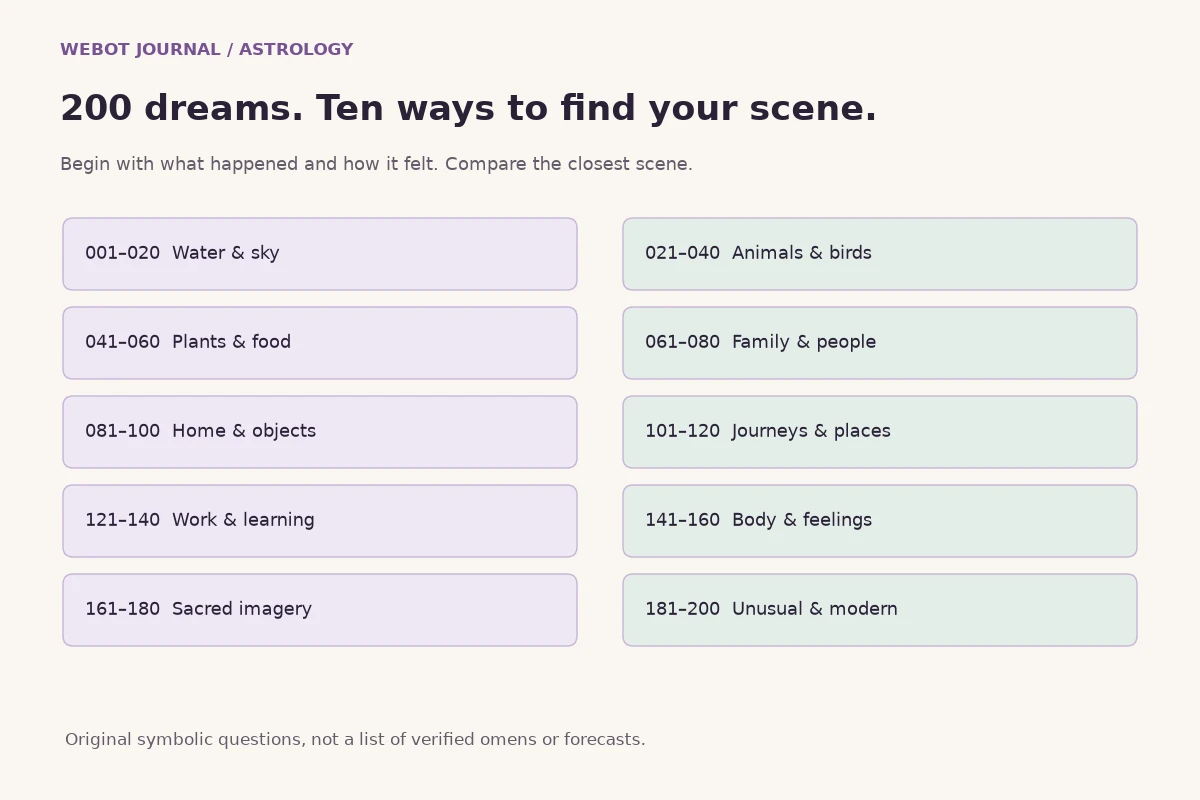
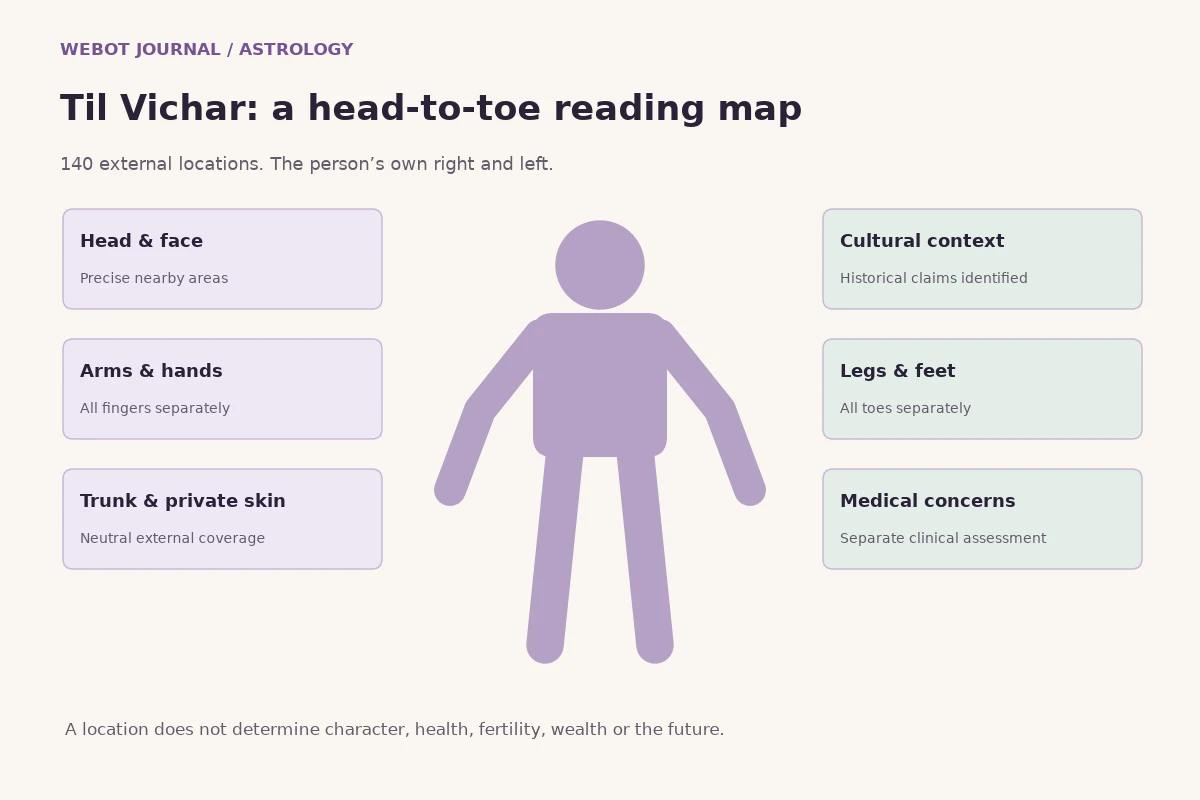
Explore traditional numerology, dream symbolism, head-to-toe Til Vichar and home Vastu, with practical explanations and a clear distinction between belief, reflection and evidence.
Explore Astrology